
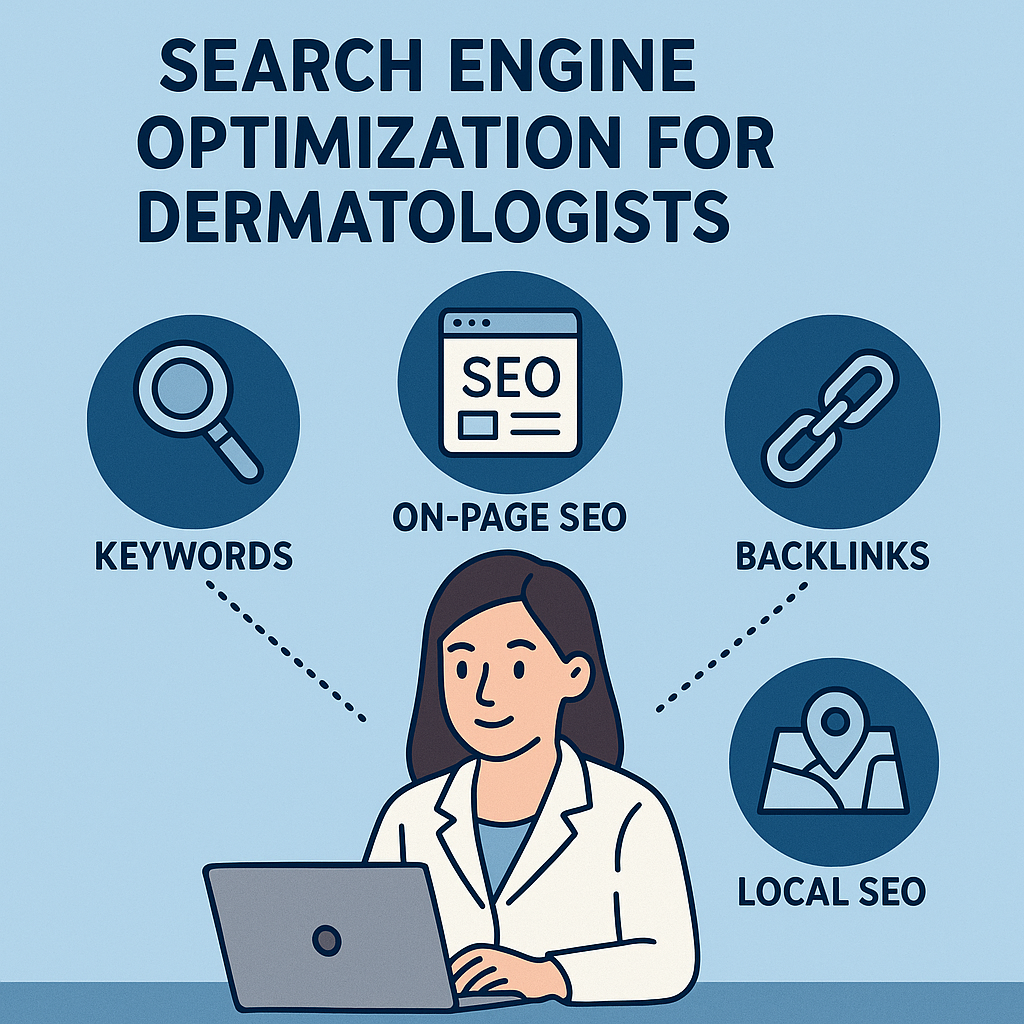
Dermatology clinics need to have a strong online presence in today’s digital world. Most people now use Google to find healthcare providers, so it’s important for dermatologists to show up at the top of the search results. But having a website isn’t enough to make this happen. To get more patients and make your site more visible, you need to take a focused approach to Search Engine Optimisation for Dermatologists.
In this full guide, we’ll look at SEO strategies made just for dermatologists. This article will give you useful tips and steps to take to improve your clinic’s website, get more traffic, and get more patients to book appointments, whether you’re new to SEO or want to improve your website even more.
What is SEO and Why Do Dermatologists Need It?
Search Engine Optimisation (SEO) is the process of making your website better so that it shows up higher in search engine results pages (SERPs). SEO is very important for dermatologists because it ensures that people who are looking for services like “dermatologist near me,” “acne treatment,” or “skin cancer screening” can find your practice. Here’s why SEO is especially important for dermatology:
More Online Visibility
SEO makes it easier for people to find your clinic by ensuring it shows up in relevant search results.
Get Local Patients
Local SEO is a part of SEO that ensures you show up in local searches and map listings. This is very important for getting patients in your area.
Establishing Authority
Your clinic will look like an expert in dermatology if you have high-quality content that ranks well.
Long-Term Growth
SEO provides long-term results that keep helping your practice as you maintain and improve your rankings.
Dermatologists can improve their chances of showing up at the top of Google searches by focusing on SEO. This will bring in more patients and help their businesses grow.
Important Parts of Dermatology SEO
Dermatologists need to pay attention to several important elements if they want to do well in SEO. These aspects help ensure that your website is search engine-friendly and provides a good experience for users. Let’s look at the main parts of dermatology SEO.
1. Researching Keywords
Finding the right keywords is the first step in effective SEO. These are the words that people looking for dermatology services are most likely to type into a search engine. Tools like Google Keyword Planner and SEMrush can help you find keywords that get a lot of traffic and are related to your services.
Some target keywords for dermatologists include:
- “Best dermatologist for treating acne”
- “Paediatric dermatologist in [city]”
- “Dermatology office for treating eczema”
- “Finding skin cancer near me”
2. SEO On-Page
On-page SEO refers to optimizing the content and structure of each page on your website. You can improve your on-page SEO by doing the following:
- Title Tags and Meta Descriptions: These are the first things that people see when they search. Include your target keywords in both of them.
- Header Tags (H1, H2, H3): Break up your content to make it easier to read. Ensure that your main keyword is in the H1 tag and related keywords in the H2 and H3 tags.
- Internal Linking: Link to other pages on your website related to the content. This helps search engines find your pages and helps visitors find more information.
- Image Optimisation: Use alt text to describe your images so that search engines can better understand them.
3. SEO for Tech
Technical SEO refers to improving the technical aspects of your website to provide a better user experience and make it easier for search engines to crawl and index your site. Key elements include:
- Site Speed: A website that loads quickly is better for users and helps it rank higher in Google.
- Mobile Optimisation: Many patients search for dermatologists on their phones. Check to see if your website is mobile-friendly.
- URL Structure: Use clear, descriptive URLs with relevant keywords. For example, “www.yoursite.com/acne-treatment“.
4. Making Content
Content is crucial for SEO. Posting high-quality, useful content on a regular basis can help improve your rankings. Content that answers common patient questions or provides valuable information will not only help you rank higher but also demonstrate your expertise.
Types of content to create:
- Blog Posts: Teach patients about skin problems, how to treat them, and how to avoid them.
- FAQs: Answer frequently asked questions to address common patient concerns.
- Service Pages: Create separate pages for each service or treatment you offer, such as “acne treatment” or “laser skin resurfacing.”
SEO for Dermatology Clinics in Your Area
Most patients want to see a dermatologist in their area, so local SEO is crucial. Optimizing your clinic for local search results can greatly increase your chances of being found by patients nearby.
1. Google Business Profile
One of the best local SEO tools is your Google Business Profile. When people search for dermatologists near them, your clinic can show up in Google search results and on Google Maps. Here’s how to optimize your Google Business Profile:
- Ensure your clinic’s Name, Address, and Phone Number (NAP) are correct.
- Include your website URL and business hours.
- Upload high-quality pictures of your clinic, staff, and treatment rooms.
- Ask patients to leave reviews and respond to them.
2. Consistency of NAP
Ensure that your clinic’s Name, Address, and Phone Number (NAP) are consistent across all of your online platforms, such as your website, Google Business Profile, directories, and social media. Inconsistent NAP information can hurt your rankings.
3. Local Citations
Local citations occur when other websites and directories mention your clinic’s NAP. The more reputable sites link to your practice, the more trustworthy and relevant Google will consider it.
4. Reviews from Patients
Reviews are vital for local SEO. Positive reviews not only improve your SEO but also increase patient trust. Make it easy for patients to leave reviews on Google, Yelp, and other review platforms.
How to Use Content to Boost Your SEO
To improve your search engine rankings, you need a consistent content plan. Your content should not only be optimized for SEO but also address patients’ questions and concerns.
1. Writing a Blog
Regular blog posts can help you target long-tail keywords, answer patient questions, and keep your website fresh. For instance, a blog post titled “How to Stop Acne in Teens” can attract both teens and their parents.
2. Common Questions
Create a comprehensive FAQ section on your website to answer common questions, such as “What to expect at your first dermatology appointment?” and “How much does acne treatment cost?” This can help capture voice search queries and featured snippets.
3. Case Studies with Before-and-After Photos
Sharing case studies with before-and-after pictures can demonstrate your expertise and help bring in new patients. These case studies also make your website more trustworthy and easier to find in search results.
Building Links and Authority Online
To increase your site’s authority, you need to build backlinks. Google views backlinks (links from other websites to your site) as a vote of confidence in your content.
1. Blogging as a Guest
Writing guest posts on reputable healthcare or dermatology blogs is an excellent way to get high-quality backlinks and drive traffic to your site.
2. References
Citing authoritative websites, such as health directories and industry associations, can improve your website’s credibility and SEO rankings.
Advice on How to Improve Your Website
Your website needs to be optimized for both users and search engines to make your SEO efforts effective. Here are some key tips for improving your website:
- Use tools like Google PageSpeed Insights to test and speed up your website.
- Mobile Design: Ensure your website looks great and works well on all screen sizes, as many patients search for dermatologists on mobile devices.
- Navigation and User Experience: Simplify website navigation so patients can easily find what they need and are encouraged to schedule appointments.
- Schema Markup: Use structured data (schema markup) to help search engines understand your content better and increase the likelihood of appearing in rich snippets.
Things Dermatologists Should Not Do with SEO
To ensure your SEO strategy works, avoid these common mistakes:
- Keyword Stuffing: Overusing keywords can make your content appear unnatural and hurt your rankings. Focus on readability first.
- Not Optimising for Mobile: A website that isn’t mobile-friendly will experience higher bounce rates and lower rankings.
- Bad User Experience: A slow or difficult-to-navigate website will discourage patients and hurt your rankings.
- Neglecting Local SEO: Make sure your Google Business Profile is updated, your NAP is consistent, and encourage patients to leave reviews.
Are you ready to make your dermatology clinic more visible online? Set up a free SEO audit or strategy session with our expert team to find ways to improve your search rankings and attract new patients.
Questions and Answers
Q1: How long does it take for dermatologists to see results from SEO?
SEO is a long-term strategy. It usually takes three to six months to see significant changes in your rankings and traffic.
Q2: What can I do to improve my dermatology practice’s local SEO?
Make sure your Google Business Profile is up to date, your NAP is consistent, and encourage patients to leave reviews on Google and Yelp.
Q3: How do you create content that is good for SEO?
Answer common patient questions, use target keywords naturally, and create high-quality, useful content.
Q4: Should I hire an SEO expert for my dermatology business?
You can do some SEO work on your own, but an expert can help you use advanced methods to ensure long-term success.
End
SEO is a powerful tool for dermatologists to attract more patients and grow their business. By conducting keyword research, optimizing your website, creating valuable content, and focusing on local SEO, you can improve your online visibility and rankings. Start applying these SEO tips today, and watch your practice grow in 2025 and beyond.
What is SEO and Why Do Dermatologists Need It?
Search Engine Optimisation (SEO) is the process of making your website better so that it shows up higher in search engine results pages (SERPs). SEO is very important for dermatologists because it ensures that people who are looking for services like “dermatologist near me,” “acne treatment,” or “skin cancer screening” can find your practice. Here’s why SEO is especially important for dermatology:
More Online Visibility
SEO makes it easier for people to find your clinic by ensuring it shows up in relevant search results.
Get Local Patients
Local SEO is a part of SEO that ensures you show up in local searches and map listings. This is very important for getting patients in your area.
Establishing Authority
Your clinic will look like an expert in dermatology if you have high-quality content that ranks well.
Long-Term Growth
SEO provides long-term results that keep helping your practice as you maintain and improve your rankings.
Dermatologists can improve their chances of showing up at the top of Google searches by focusing on SEO. This will bring in more patients and help their businesses grow.
Important Parts of Dermatology SEO
Dermatologists need to pay attention to several important elements if they want to do well in SEO. These aspects help ensure that your website is search engine-friendly and provides a good experience for users. Let’s look at the main parts of dermatology SEO.
1. Researching Keywords
Finding the right keywords is the first step in effective SEO. These are the words that people looking for dermatology services are most likely to type into a search engine. Tools like Google Keyword Planner and SEMrush can help you find keywords that get a lot of traffic and are related to your services.
Some target keywords for dermatologists include:
- “Best dermatologist for treating acne”
- “Paediatric dermatologist in [city]”
- “Dermatology office for treating eczema”
- “Finding skin cancer near me”
2. SEO On-Page
On-page SEO refers to optimizing the content and structure of each page on your website. You can improve your on-page SEO by doing the following:
- Title Tags and Meta Descriptions: These are the first things that people see when they search. Include your target keywords in both of them.
- Header Tags (H1, H2, H3): Break up your content to make it easier to read. Ensure that your main keyword is in the H1 tag and related keywords in the H2 and H3 tags.
- Internal Linking: Link to other pages on your website related to the content. This helps search engines find your pages and helps visitors find more information.
- Image Optimisation: Use alt text to describe your images so that search engines can better understand them.
3. SEO for Tech
Technical SEO refers to improving the technical aspects of your website to provide a better user experience and make it easier for search engines to crawl and index your site. Key elements include:
- Site Speed: A website that loads quickly is better for users and helps it rank higher in Google.
- Mobile Optimisation: Many patients search for dermatologists on their phones. Check to see if your website is mobile-friendly.
- URL Structure: Use clear, descriptive URLs with relevant keywords. For example, “www.yoursite.com/acne-treatment“.
4. Making Content
Content is crucial for SEO. Posting high-quality, useful content on a regular basis can help improve your rankings. Content that answers common patient questions or provides valuable information will not only help you rank higher but also demonstrate your expertise.
Types of content to create:
- Blog Posts: Teach patients about skin problems, how to treat them, and how to avoid them.
- FAQs: Answer frequently asked questions to address common patient concerns.
- Service Pages: Create separate pages for each service or treatment you offer, such as “acne treatment” or “laser skin resurfacing.”
SEO for Dermatology Clinics in Your Area
Most patients want to see a dermatologist in their area, so local SEO is crucial. Optimizing your clinic for local search results can greatly increase your chances of being found by patients nearby.
1. Google Business Profile
One of the best local SEO tools is your Google Business Profile. When people search for dermatologists near them, your clinic can show up in Google search results and on Google Maps. Here’s how to optimize your Google Business Profile:
- Ensure your clinic’s Name, Address, and Phone Number (NAP) are correct.
- Include your website URL and business hours.
- Upload high-quality pictures of your clinic, staff, and treatment rooms.
- Ask patients to leave reviews and respond to them.
2. Consistency of NAP
Ensure that your clinic’s Name, Address, and Phone Number (NAP) are consistent across all of your online platforms, such as your website, Google Business Profile, directories, and social media. Inconsistent NAP information can hurt your rankings.
3. Local Citations
Local citations occur when other websites and directories mention your clinic’s NAP. The more reputable sites link to your practice, the more trustworthy and relevant Google will consider it.
4. Reviews from Patients
Reviews are vital for local SEO. Positive reviews not only improve your SEO but also increase patient trust. Make it easy for patients to leave reviews on Google, Yelp, and other review platforms.
How to Use Content to Boost Your SEO
To improve your search engine rankings, you need a consistent content plan. Your content should not only be optimized for SEO but also address patients’ questions and concerns.
1. Writing a Blog
Regular blog posts can help you target long-tail keywords, answer patient questions, and keep your website fresh. For instance, a blog post titled “How to Stop Acne in Teens” can attract both teens and their parents.
2. Common Questions
Create a comprehensive FAQ section on your website to answer common questions, such as “What to expect at your first dermatology appointment?” and “How much does acne treatment cost?” This can help capture voice search queries and featured snippets.
3. Case Studies with Before-and-After Photos
Sharing case studies with before-and-after pictures can demonstrate your expertise and help bring in new patients. These case studies also make your website more trustworthy and easier to find in search results.
Building Links and Authority Online
To increase your site’s authority, you need to build backlinks. Google views backlinks (links from other websites to your site) as a vote of confidence in your content.
1. Blogging as a Guest
Writing guest posts on reputable healthcare or dermatology blogs is an excellent way to get high-quality backlinks and drive traffic to your site.
2. References
Citing authoritative websites, such as health directories and industry associations, can improve your website’s credibility and SEO rankings.
Advice on How to Improve Your Website
Your website needs to be optimized for both users and search engines to make your SEO efforts effective. Here are some key tips for improving your website:
- Use tools like Google PageSpeed Insights to test and speed up your website.
- Mobile Design: Ensure your website looks great and works well on all screen sizes, as many patients search for dermatologists on mobile devices.
- Navigation and User Experience: Simplify website navigation so patients can easily find what they need and are encouraged to schedule appointments.
- Schema Markup: Use structured data (schema markup) to help search engines understand your content better and increase the likelihood of appearing in rich snippets.
Things Dermatologists Should Not Do with SEO
To ensure your SEO strategy works, avoid these common mistakes:
- Keyword Stuffing: Overusing keywords can make your content appear unnatural and hurt your rankings. Focus on readability first.
- Not Optimising for Mobile: A website that isn’t mobile-friendly will experience higher bounce rates and lower rankings.
- Bad User Experience: A slow or difficult-to-navigate website will discourage patients and hurt your rankings.
- Neglecting Local SEO: Make sure your Google Business Profile is updated, your NAP is consistent, and encourage patients to leave reviews.
Are you ready to make your dermatology clinic more visible online? Set up a free SEO audit or strategy session with our expert team to find ways to improve your search rankings and attract new patients.
Questions and Answers
Q1: How long does it take for dermatologists to see results from SEO?
SEO is a long-term strategy. It usually takes three to six months to see significant changes in your rankings and traffic.
Q2: What can I do to improve my dermatology practice’s local SEO?
Make sure your Google Business Profile is up to date, your NAP is consistent, and encourage patients to leave reviews on Google and Yelp.
Q3: How do you create content that is good for SEO?
Answer common patient questions, use target keywords naturally, and create high-quality, useful content.
Q4: Should I hire an SEO expert for my dermatology business?
You can do some SEO work on your own, but an expert can help you use advanced methods to ensure long-term success.
End
SEO is a powerful tool for dermatologists to attract more patients and grow their business. By conducting keyword research, optimizing your website, creating valuable content, and focusing on local SEO, you can improve your online visibility and rankings. Start applying these SEO tips today, and watch your practice grow in 2025 and beyond.