
It’s more important than ever for dermatologists to have a strong online presence in a field that is very competitive. Most patients look online for information about skin care problems and local dermatologists, so it’s crucial for dermatology offices to have a solid digital marketing plan. Content Marketing for Dermatologists is one of the best ways to get and keep patients out of all the options available.
This article will cover why dermatologists need to use content marketing, the types of content to focus on, how to create an effective content strategy, SEO tips for dermatology websites, and more. These tips will help you grow your practice and see more patients in 2025 and beyond, whether you’re an experienced dermatologist or just starting out.
Why Dermatologists Should Care About Content Marketing
Content marketing isn’t just about creating content; it’s about creating the right content that speaks to your ideal patients. Here’s why content marketing is especially important in dermatology:
Build Trust and Credibility
Videos, blog posts, and testimonials that teach people about your field show that you’re knowledgeable and help potential patients trust you.
Get More Attention Online
Google and other search engines rank content higher that answers patients’ questions. Effective content increases your online visibility.
Patient Education
Many people visit dermatologists for conditions like acne, eczema, or skin cancer. Providing useful treatment information can make patients more likely to schedule an appointment.
Cost-Effective Marketing
Content marketing is cheaper than traditional forms of advertising like print or TV ads and yields long-lasting results.
In 2025, content marketing remains one of the most effective ways to connect with patients, build relationships, and drive business growth.
Top Content Types Dermatologists Should Use
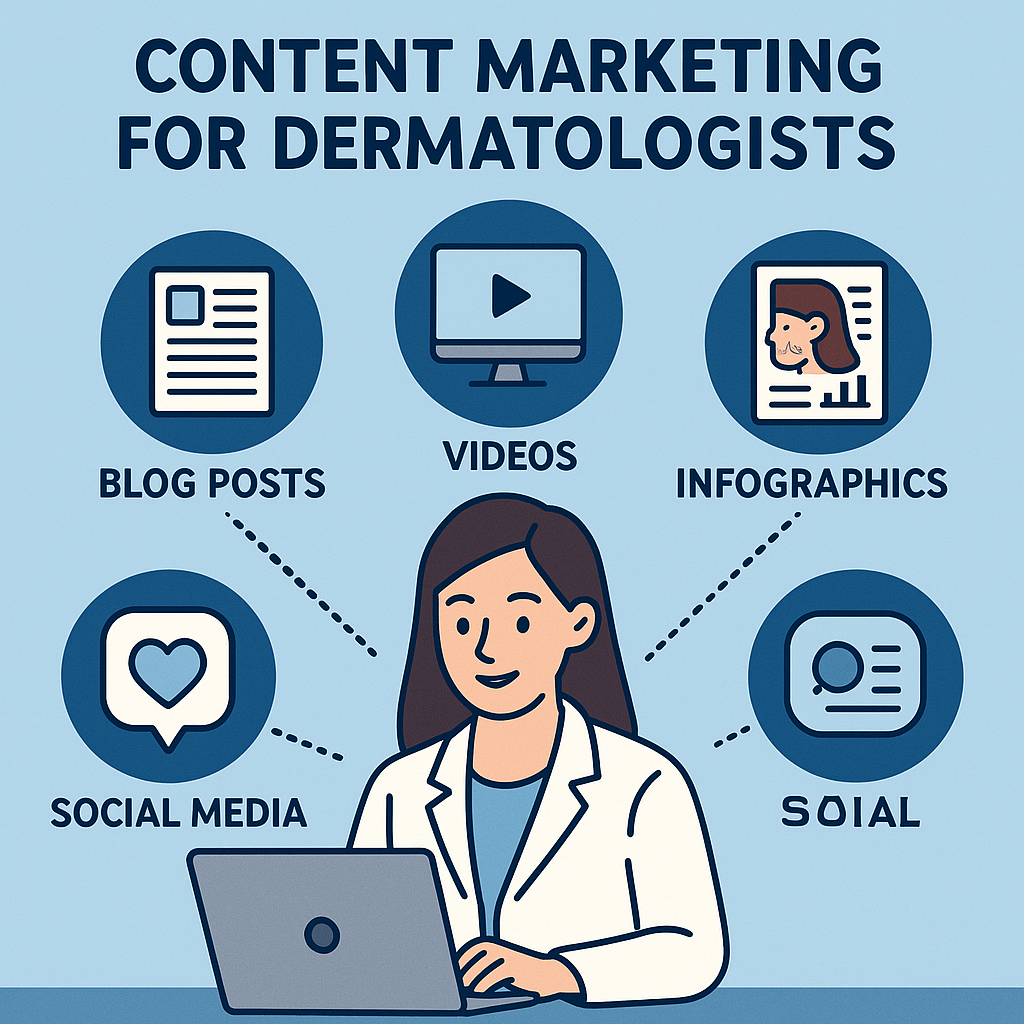
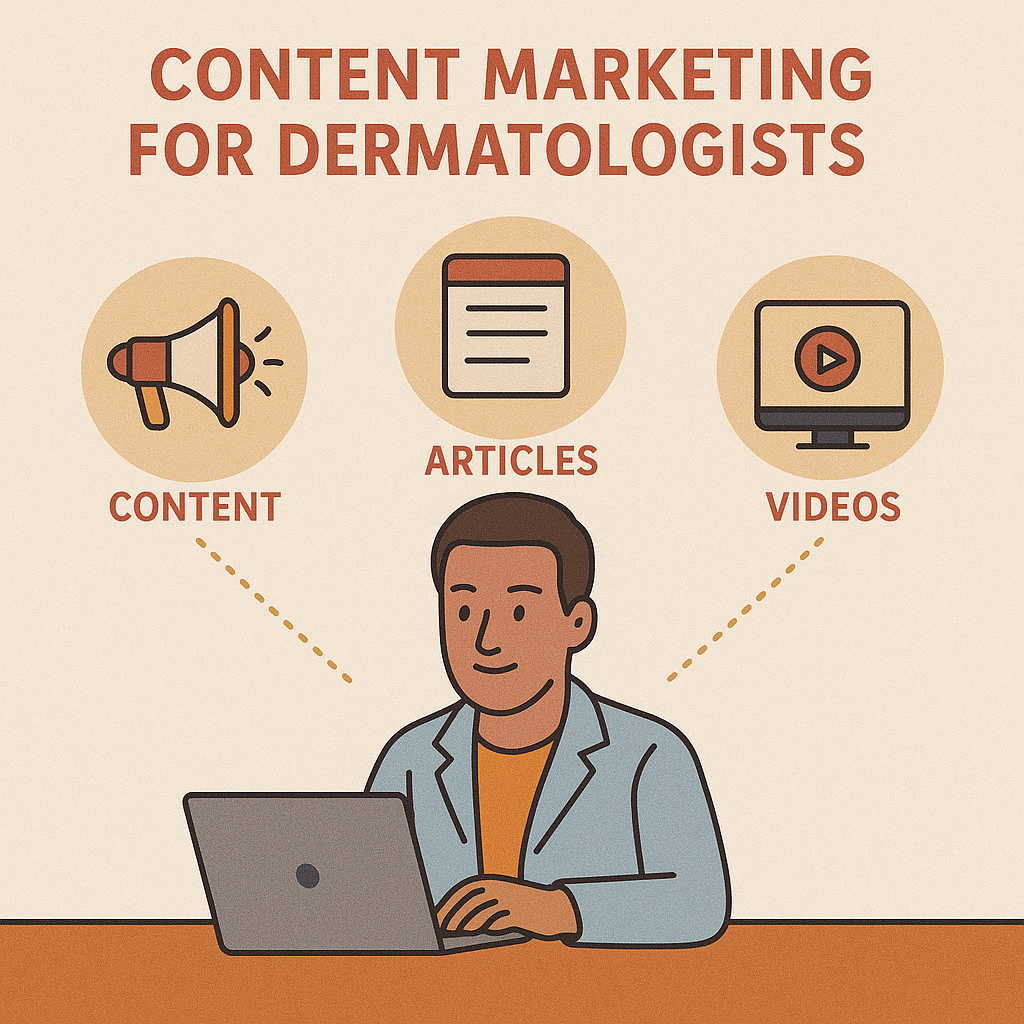
To make the most of content marketing, dermatologists should focus on various content formats. Here are the top types of content proven to attract patients and keep them engaged:
1. Blog Posts
Blogging is one of the most effective content marketing strategies for dermatologists. It allows you to share valuable information about skin conditions, treatments, and prevention tips, all of which are highly searchable on Google.
Example Blog Post Topics:
- “Top 10 Skin Care Tips for Acne-Free Skin”
- “How to Spot Early Signs of Skin Cancer”
- “What to Expect During Your First Dermatology Appointment”
2. Patient Testimonials & Reviews
Patient testimonials provide social proof of your expertise and care. Showcase before-and-after photos or video testimonials to highlight successful treatments and satisfied patients.
3. Before-and-After Images
Visual content, like before-and-after images, is effective in showing the results of your treatments. Whether it’s acne, laser treatment, or cosmetic dermatology, these images help potential patients visualize their own results.
4. Explainer Videos
Patients are more likely to engage with videos than text-based content. Create short explainer videos for common skin issues and treatments. Videos help build a personal connection with patients and provide valuable information in an easily digestible format.
5. FAQs (Frequently Asked Questions)
Answer common questions about dermatology services, treatments, insurance, and more. FAQs can drive traffic to your site and make patients feel more informed before booking an appointment.
6. Skincare Tips
Offer simple, actionable skincare tips through blog posts, infographics, or social media. Advice on daily skin routines or how to protect skin from the sun can establish you as a trusted expert.
How to Build a Dermatology Content Strategy
Creating a well-defined content strategy will ensure that your marketing efforts are focused and effective. Follow these steps to develop a content strategy for your dermatology practice:
1. Set Clear Goals
Determine what you want to achieve with your content marketing. Do you want to attract new patients, educate existing ones, or establish your authority in a niche area? Set measurable goals, such as increasing patient inquiries by 20% or growing your blog’s traffic by 50% in six months.
2. Define Your Ideal Patient Persona
Understanding your target audience is essential for creating content that resonates. Are you focusing on patients with specific conditions, like acne or psoriasis, or offering cosmetic dermatology services? By defining your ideal patient persona, you can craft content that speaks directly to their needs.
3. Conduct Keyword Research
Incorporate relevant keywords like “dermatology treatments,” “skin care for acne,” or “best dermatologist in [your city]” into your content. Use tools like Google Keyword Planner or SEMrush to find search terms that potential patients are using.
4. Create a Content Calendar
Plan your content ahead of time to ensure consistent publishing. Organize your content around key themes and seasonal topics (e.g., sunscreen tips in the summer). A content calendar will help you stay organized and ensure that you’re meeting your audience’s needs.
SEO Tips for Dermatology Websites
Optimizing your website for search engines is crucial to ensure your content reaches the right audience. Here are some key SEO tips for dermatology websites:
1. On-Page SEO
- Title Tags & Meta Descriptions: Ensure your title tags and meta descriptions contain your target keywords and accurately describe the content.
- Header Tags: Use H1, H2, and H3 tags to organize your content, making it easier for both users and search engines to read.
- Internal Linking: Link relevant blog posts and service pages to one another. This improves navigation and helps spread link equity across your site.
2. Local SEO
Patients often search for dermatologists near them, so optimizing for local SEO is crucial. Make sure your Google Business Profile is up to date, and encourage patients to leave reviews. Additionally, ensure your business name, address, and phone number (NAP) are consistent across all online platforms.
3. Schema Markup
Implement schema markup on your website to help search engines better understand your content. This can help your practice appear in rich snippets, such as FAQs or reviews, in search results.
Social Media & Video Content Ideas
Social media is a powerful tool for engaging with patients and promoting your content. Here are some social media and video content ideas for dermatologists:
Social Media Content Ideas:
- Share skincare tips and educational posts.
- Post before-and-after photos (with patient consent).
- Host a live Q&A session on common dermatology questions.
- Run a patient spotlight to highlight success stories.
Video Content Ideas:
- Create an introduction video about your practice and team.
- Share “how-to” videos for at-home skincare routines.
- Offer virtual consultations for common skin concerns.
Common Mistakes to Avoid
When implementing a content marketing strategy for your dermatology practice, avoid these common pitfalls:
- Lack of Consistency: Sporadic posting can lead to disengagement. Stick to a consistent schedule.
- Overly Technical Language: Avoid medical jargon that might confuse your audience. Keep your language simple and easy to understand.
- Neglecting SEO: Even great content needs to be optimized for search engines to reach the right audience.
Call to Action
Ready to take your dermatology practice to the next level? Let’s create a content strategy tailored to your needs. Schedule a free strategy call today to discuss how we can help you grow your online presence and attract more patients.
FAQs: Content Marketing for Dermatologists
Q1: How do I choose the right content topics for my dermatology practice?
Start by researching common skin issues that patients are concerned about. Use keyword research tools and engage with patients on social media to discover what topics they’re interested in.
Q2: How often should I post content for my dermatology practice?
Aim for at least one blog post per week, along with regular social media updates. The key is consistency—posting regularly builds trust and improves SEO.
Q3: Can video marketing help my dermatology practice grow?
Absolutely! Video content, such as explainer videos, patient testimonials, and educational tutorials, can engage your audience and boost your online visibility.
Q4: How do I track the success of my content marketing?
Use Google Analytics to monitor website traffic, blog engagement, and conversion rates. Additionally, track social media metrics like likes, shares, and comments.
Q5: Is it important to get patient reviews for my content marketing?
Yes, patient reviews play a critical role in building trust and attracting new patients. Encourage satisfied patients to leave reviews on Google and social media platforms.
Conclusion
Content marketing is an essential strategy for dermatologists looking to attract and retain patients. By creating valuable, informative content, optimizing your website for SEO, and engaging with your audience through social media and video, you can grow your practice and establish yourself as an authority in the dermatology space. Start small, be consistent, and track your progress. With the right content strategy, your dermatology practice can thrive online in 2025 and beyond.